G.I. stitching wire
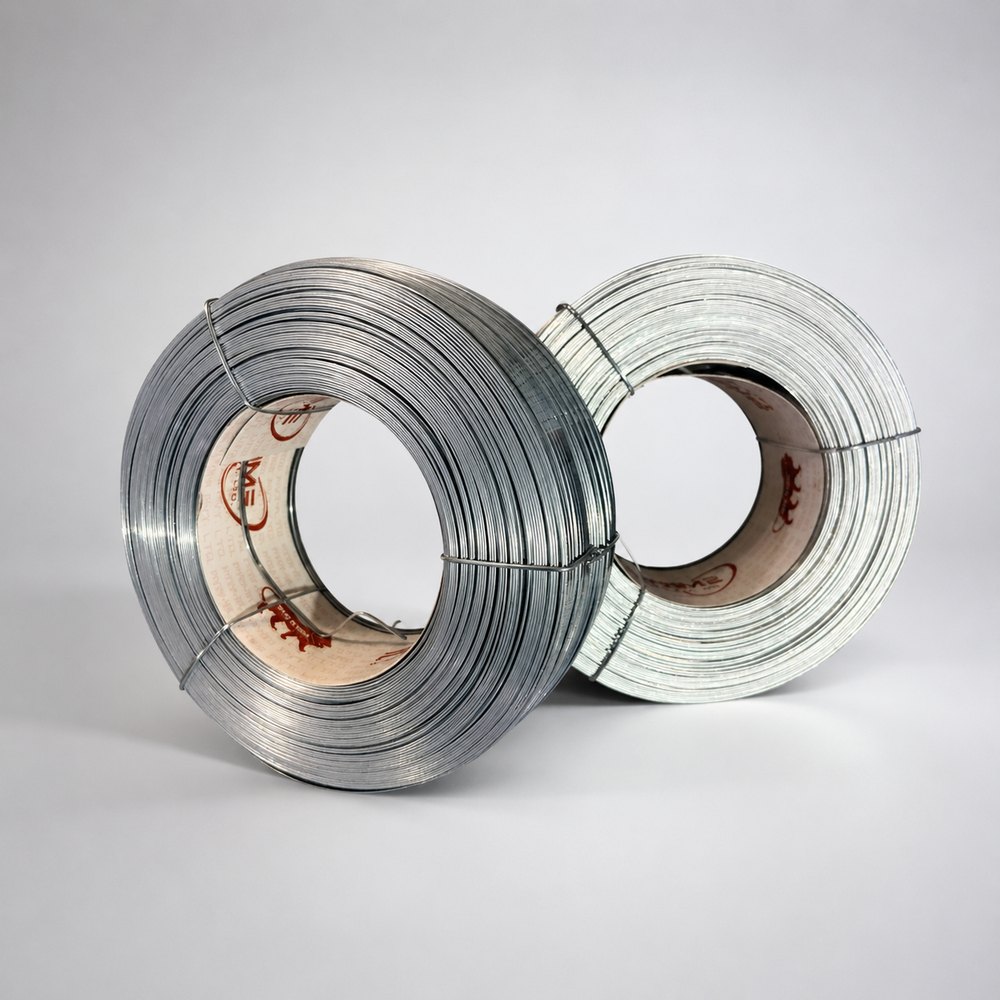
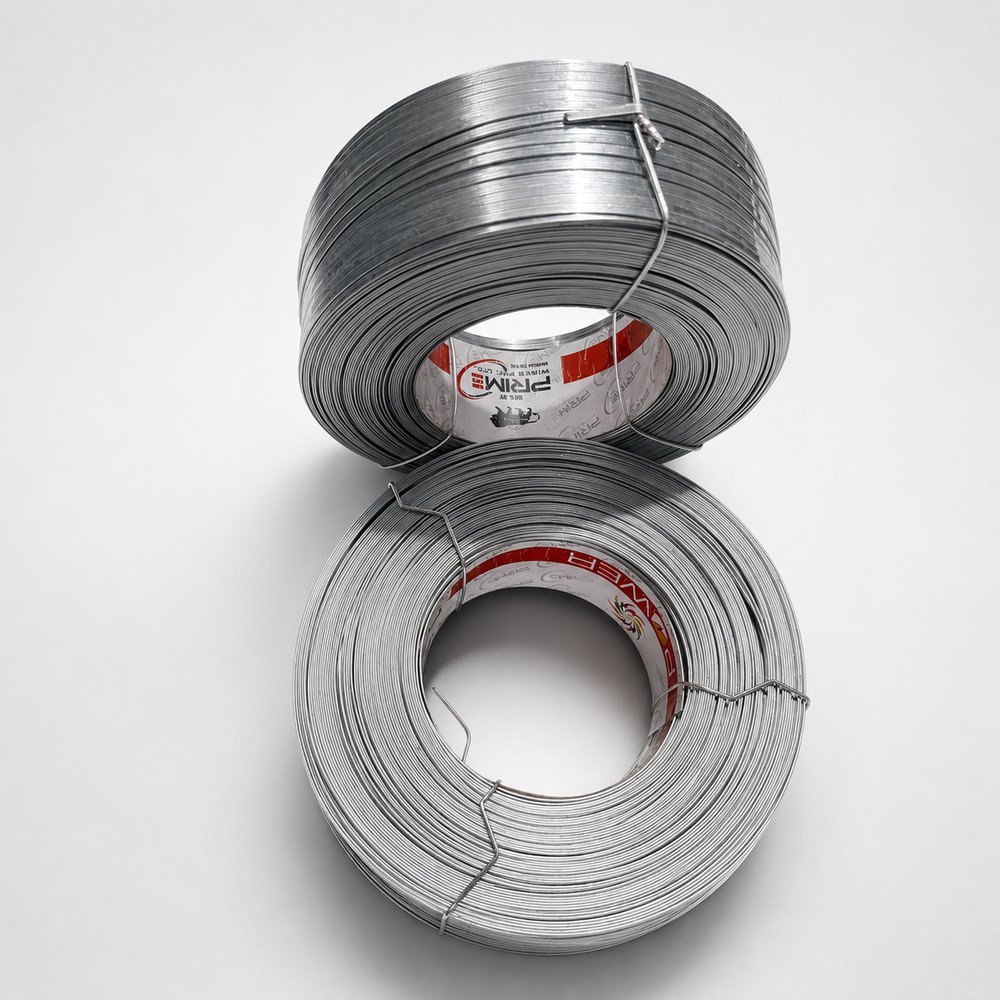
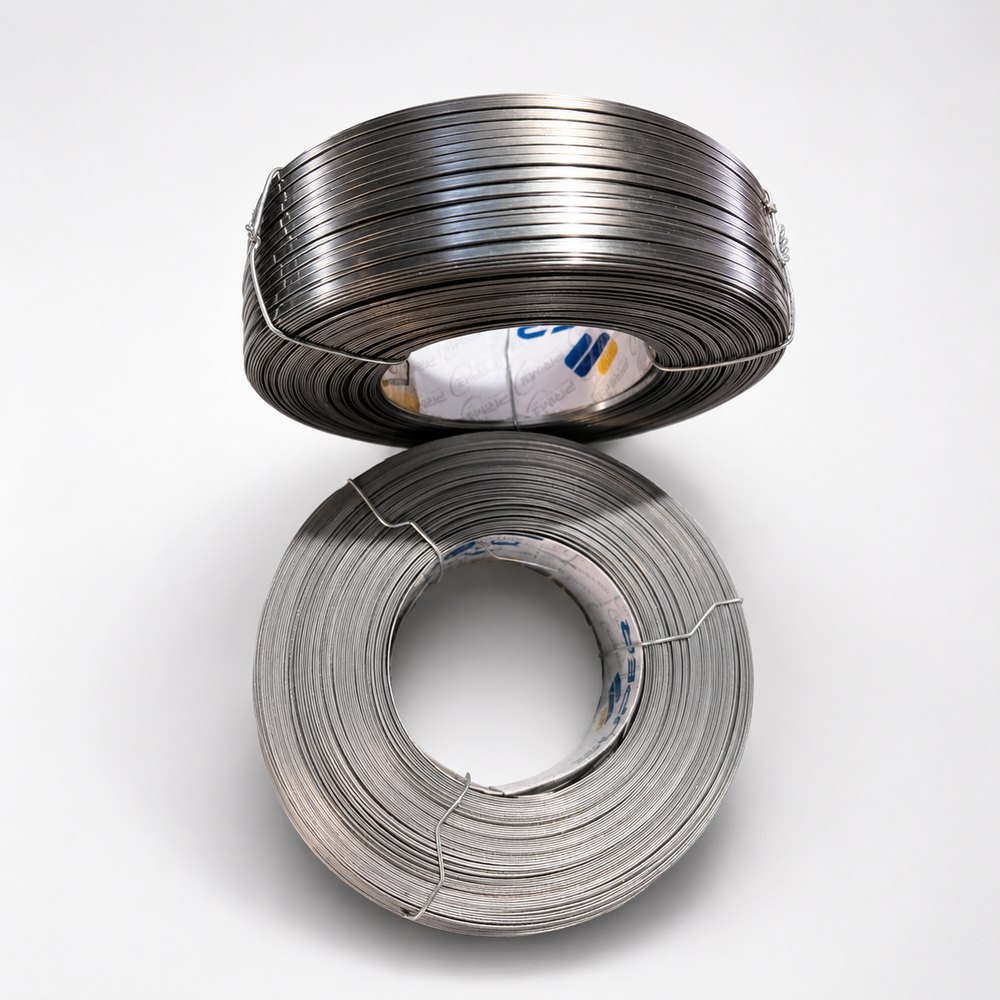
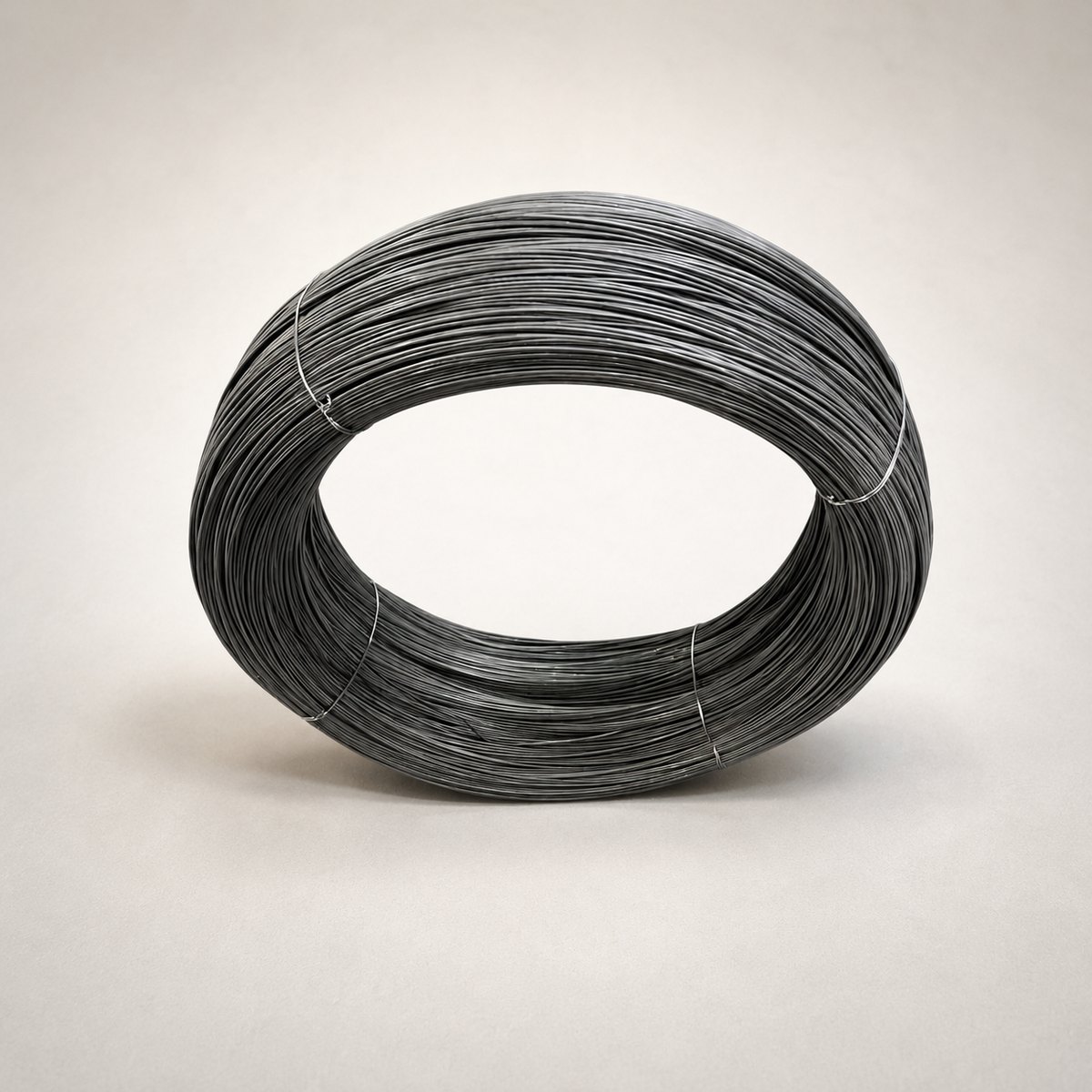
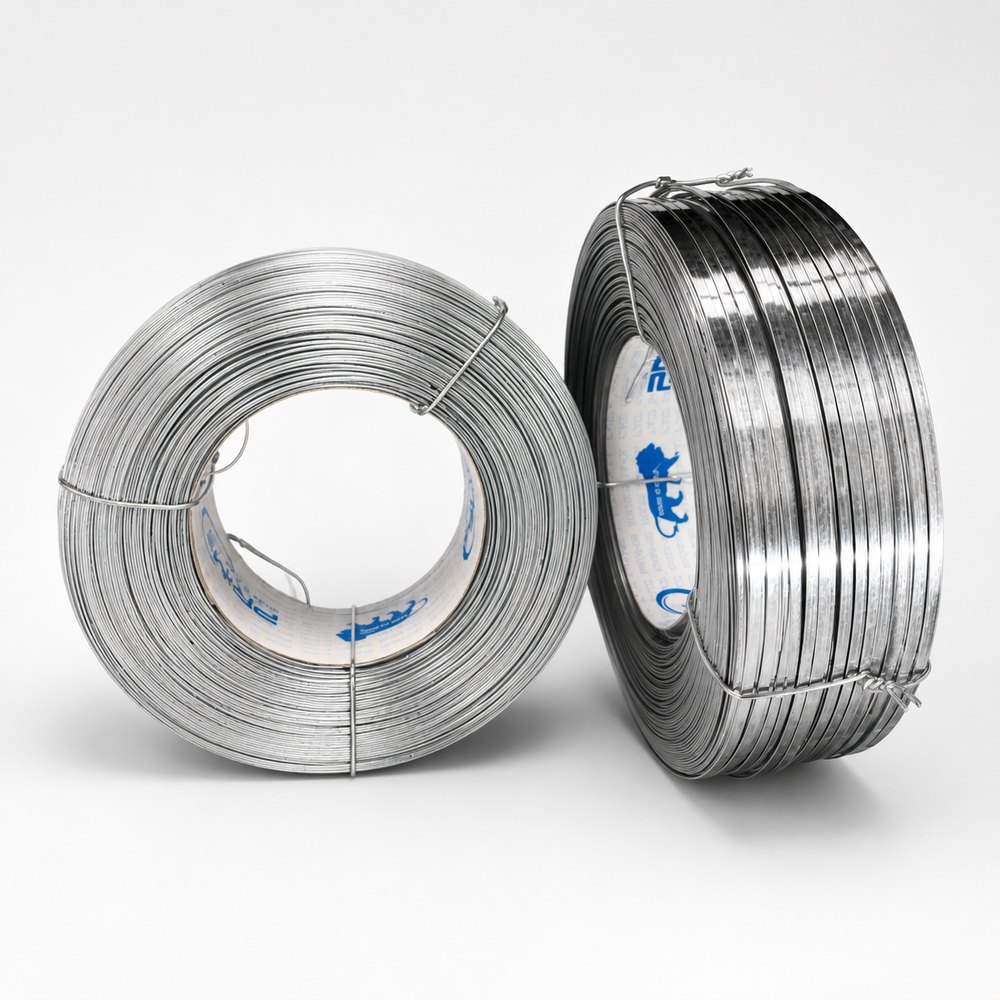
G.I. stitching wire is mild steel wire coated with zinc and rolled flat. It is the stitching wire most used by corrugated box makers in India, and the best value choice for cartons that are kept dry and opened within a few weeks.
| Property | Value |
|---|---|
| Base metal | Low carbon mild steel |
| Coating | Electro galvanised zinc |
| Coating weight | 8 to 12 g/m² |
| Tensile strength | 700 to 900 N/mm² |
| Elongation | 2 to 6% |
| Flat sections | 20 to 26 gauge, 0.90 × 2.20 mm to 0.45 × 1.15 mm |
| Thickness tolerance | ± 0.02 mm |
| Width tolerance | ± 0.05 mm |
| Finish | Bright silver |
| Corrosion life | Low, dry storage only |
| Relative cost / kg | Baseline |
| Spools | 2, 5, 15, 25 kg, core to customer specification |
| Packing | Shrink wrapped and palletised; VCI on request for export |
Where it is used
Its even size and clean surface keep high speed stitching machines running without stoppages.
FMCG cartons, dry warehouses, local deliveries and any box opened within a few weeks. For sea export, coastal or monsoon storage, or pharma and food cartons, choose a heavier grade.
Works on all common machines
G.I. wire is the easiest grade to run. If your machine runs flat stitching wire, it will run this.
Open the machine finder| Machine | Gauge | Spool |
|---|---|---|
| Insun | 22 to 24 | 15 / 25 kg |
| Gods Will | 22 to 25 | 15 / 25 kg |
| MEPL | 23 to 25 | 5 / 15 kg |
| ECH | 22 to 24 | 15 kg |
| Joy Dzign | 23 to 25 | 5 / 15 kg |
| Manual / foot | 24 to 26 | 2 / 5 kg |
Common questions
What is galvanised stitching wire?
Galvanised stitching wire, commonly called G.I. stitching wire, is a low carbon mild steel wire that has been electroplated with a layer of zinc and then rolled to a flat section for use in box stitching machines. The zinc gives the wire its bright silver finish and protects it against surface rust. Typical coating weight is 8 to 12 grams per square metre.
Is galvanised stitching wire rust proof?
No. Galvanised stitching wire is rust resistant, not rust proof. The zinc is a coating over a mild steel core, so where the coating is thin, scratched or worn through by the stitching head, the steel underneath can corrode. For stitching that cannot rust you need a solid alloy with no steel in it, which means pure brass or pure copper stitching wire.
What gauge does galvanised stitching wire come in?
Prime Wires galvanised stitching wire is supplied in flat sections from 20 gauge, nominally 0.90 by 2.20 mm, down to 26 gauge, nominally 0.45 by 1.15 mm. Most single and double wall corrugated carton work runs on 23 or 24 gauge. Heavier multiwall board takes 20 to 22 gauge. Book and saddle stitching takes 25 to 26 gauge.
How much does one stitch of galvanised wire cost?
At 23 gauge, a typical corrugated stitch consuming about 45 millimetres of wire uses roughly 0.36 grams of wire. At an indicative rate of 92 rupees per kilogram, that is approximately 3.3 paise per stitch, or around 26 paise for an eight stitch carton. The cost per pin calculator on this site works it out for your own section, price and stitch count.
What is the difference between galvanised and rust resistant stitching wire?
The base metal is identical low carbon mild steel. The difference is the amount of zinc deposited during electroplating. Standard galvanised carries 8 to 12 grams per square metre. Rust resistant, known in the trade as R.P. wire, carries 18 to 25. Power G.I. stitching wire carries 30 to 40. A heavier zinc coating costs more per kilogram and keeps rust away for longer.